Our team
Twenty years under the hood.Ten years behind the monitor.
Five of us built Shop Tiger — mechanics and shop managers. We spent the day on the floor and the evening at the desk, and we wrote every screen in here for the person we used to be at 4:30 on a Friday.
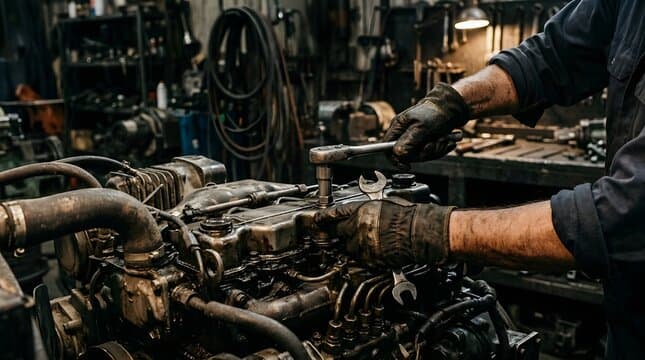
SO-1042
Cascadia · Unit 118 · 512,884 mi
How this actually started.
We met the way most crews meet — on the floor. Between the five of us there are twenty years of carrying tools and fixing trucks, and running the bays those trucks sit in. The software came later, and it came the hard way: ten years behind a monitor, mostly at night, mostly after a full shift, learning to build the thing we could not find anywhere else.
We did not come to trucking from technology. We came to technology because trucking kept breaking in the same handful of ways and nobody was fixing it. Trucks arriving at the bay with no history at all. Roadside invoices nobody could verify, from a vendor picked out of desperation at midnight. The same component failing twice because nobody wrote down what happened the first time. A whiteboard that was already wrong by nine in the morning, and a shoebox of paper that only became a problem at tax time.
We lived all of it. We stood on cold concrete through winters with almost no heat. We waited on the shoulder in high winds and blizzards for a truck that was hours out. We drove these machines up and down the mountains ourselves and brought them back down. Every one of those days cost somebody money, and most of the time that somebody was us.
So we built the tool we kept wishing existed — and we are still in shops while we build it. That is the whole story. There is no venture office behind this, no product team that has never smelled coolant. Just five guys who got tired of losing the same argument to a missing piece of paper.
5
of us
20
years carrying tools
10
years writing software
0
learned it in a boardroom
We have been in your shoes. All the way in.
Not as a research exercise. As the job we did before this one — and in some weeks, still do.
The cold concrete floor
January, a bay heater that never quite reached the far end, and hands too stiff to hold a pen by three in the afternoon. We have laid on that floor. We know how much a shop asks of a person in winter — and how little of that day should be spent writing the same thing down twice.
The side of the road, in a blizzard
High winds, no shoulder worth standing on, one bar of signal and dropping. We have made that call and we have waited for that truck. We know what a roadside invoice looks like when nobody can check it, and what it costs a fleet six months later when nobody wrote down what actually failed.
Up and down the mountains
We have driven these trucks over the passes ourselves, watched the brakes fade and the coolant climb, and brought them back down. A truck that crosses a grade twice a week is not the same truck as one running flat interstate, and its history should say so.
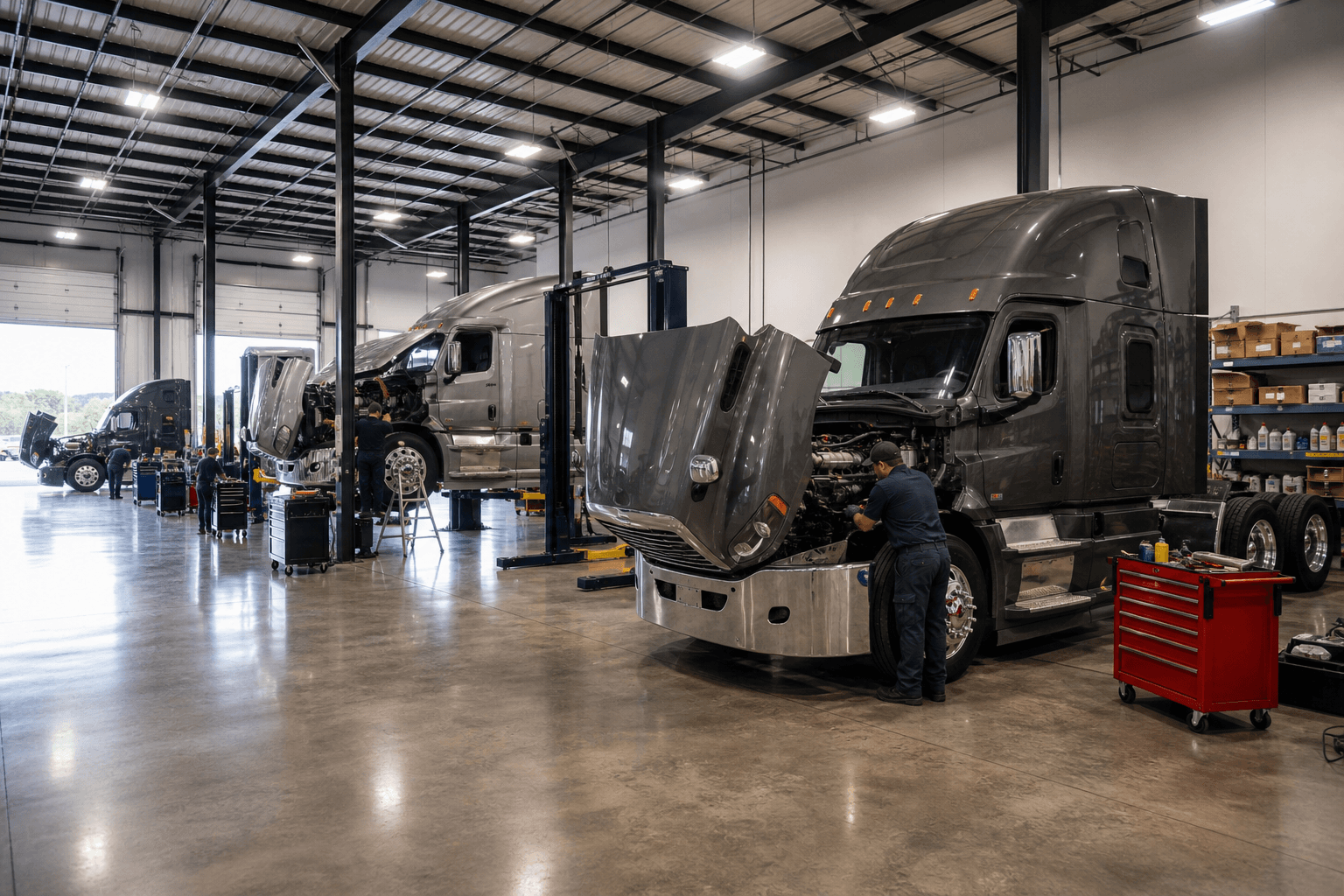
This is where the requirements came from.
Not a discovery call. Not a survey. A bay, a hood in the air, and a job that has to be right before the truck leaves.
What it changed
Every one of those days is in the software.
Shop software usually gets built by people who have read about shops, and you can tell inside of ten minutes. Here is what it looks like when the people who wrote it have been cold, stranded, and behind on a Friday.
It works with no signal.
Because we have been where there is none. Inspections and photos are captured on the phone and held there, then sync themselves the moment coverage comes back. Nobody stands in the wind waiting for a spinner, and nobody loses an hour of work to a dead bar.
A roadside repair gets written down properly.
System, component, failure mode, repair action — plus labor, parts, service call, tow, and the downtime window. Not a text box that says “fixed truck.” That structure is the whole difference between a pile of invoices and knowing which vendor and which part keep failing you.
The road and the shop see the same truck.
One history per VIN. What broke on the interstate at 2 AM and what your tech did about it on Thursday sit on the same timeline. Every shop we ever worked in kept those two halves in different places, and every one of us paid for it.
Your crew reads it in their own language.
English, Spanish, Russian, Polish and Kyrgyz, picked per person — the owner reads English while the technician reads Russian, on the same ticket. We have worked those floors. The best mechanic in the building is often not the best English speaker in the building.
The photo is not optional.
Condition photos are required where they matter and stored privately, because we have all argued about damage nobody could prove. A picture taken at the right minute has ended more disputes than any policy ever written.
We are not software people who found trucking.We are truck people who built software.
You will not be explaining your business to a support rep who has never seen a shop. When you call, you get somebody who knows what a jake brake is, what a comeback costs you, and why the truck in bay two has been sitting since Tuesday.
No card. No contract. You will be talking to a mechanic, not a sales team.